THREE:The Wesleyan Methodists were next in number to the members of the Established Church. The progress of this society was very rapid after 1820. In that year the number of its ministers was 718, and of its members or communicants in Great Britain, 191,000. In 1830 the numbers were respectively 824 and 248,000; and so largely did they increase in the next ten years, that in 1840 the ministers were 1,167, and the members 323,000. The 1851 census returns showed 6,579 chapels belonging to this connexion in England and Wales, containing accommodation for 1,447,580 persons. The Society of Friends, on the other hand, was declining. The Roman Catholics made considerable progress in England during the last two reigns. In 1829 they had 394 chapels, which[428] in 1840 had increased to 463, and in 1852 they reached 600. They had at the same time 11 colleges, 88 religious houses, and 875 priests. Their chapels at the time of the census furnished accommodation for 186,000, and the number of attendants on the morning of census Sunday of 1851 was 252,983.Among the resources of Great Britain to which she is mainly indebted for her pre-eminence as a manufacturing nation, and without which she would not have been able to make anything like the progress she has made, or to bid defiance to foreign competition as she may always do, are her mines of coal and iron. The total produce of all the British ironworks was found, after a careful estimate, to be, in 1823, 442,066 tons; in 1825, 581,367 tons; in 1828, 653,417, and in 1830, 702,584 tons. In 1844 the quantity reached 1,500,000 tons. The quantity of tin produced in England in 1820 was 3,578 tons; in 1834 it was 4,000 tons. In addition to the quantities used at home, there was a considerable exportation of tin plates, the value of which in 1820 was about ¡ê161,000, and in 1840 it was more than ¡ê360,000. The produce of the copper mines in Cornwall was much greater than that of the tin mines; for while in 1820 it was only 7,364 tons, it had increased in 1840 to 11,000 tons. The increase during 60 years had been threefold, and the value annually raised exceeded ¡ê1,000,000 sterling. In the year 1820 the quantity of coals shipped from the port of Newcastle was more than 2,000,000 tons. In the year 1840 it had increased to nearly 3,000,000. From the port of Sunderland the quantity shipped in 1820 was considerably more than 1,000,000. In 1840 it was 1,300,000 tons. Large quantities were also shipped from the port of Stockton. The chief coal districts have naturally become the chief manufacturing districts; and as the coal is on the spot, it is impossible to estimate the quantities consumed in working the factories in Lancashire, the West Riding of Yorkshire, Nottingham, Derby, Birmingham, Wolverhampton, Leicester, Coventry, and Staffordshire. The town of Sheffield alone, it was estimated in 1835, required for manufacturing purposes about 515,000 tons of coals. Dr. Buckland, in his address to the Geological Society, in 1840, stated that "the average value of the annual produce of the mines of the British islands amounts to the enormous sum of ¡ê20,000,000, of which about ¡ê8,000,000 arises from iron, and ¡ê9,000,000 from coals."
FORE:CHAPTER II. THE REIGN OF GEORGE III. (continued).The year 1763 opened with the signing of the[176] definitive treaty at Paris on the 19th of February, whence it was called the Peace of Paris. Five days later, a peace was signed between Prussia and Austria at Hubertsberg, in Saxony, to which Saxony, as the ally of Austria, was a party. Indeed, when England and France, Russia and Sweden, had withdrawn from the contest, there was little prospect of the continuance of the war. Both parties were exhausted, and yet, of the two, Frederick, in his dogged firmness, and in the almost unparalleled endurance of his people, was more than a match for Austria. If Maria Theresa could not cope with him when she had France, Russia, Saxony, and Poland, all united with her to put him down, the case was now hopeless. The English had stipulated that France should evacuate all the places in Germany and Flanders that belonged to those countries, and Frederick had easily induced the German states, in these circumstances, to a maintenance of neutrality. Austria, therefore, consented to this peace. She stood out the longest for the retention of Glatz, the only place won from Frederick still in her hands, but she was compelled to yield that, too. Both parties returned to the same situations as before the commencement of this fatal Seven Years' War.
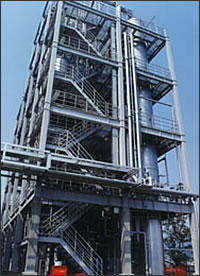
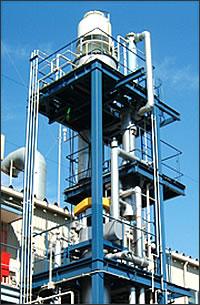
Methanol refinement systems, amyl alcohol refinement systems, ethanol refinement systems, hexanol distillation systems, propanol refinement systems, cyclohexanol distillation systems, isopropanol dehydration systems, ethylene glycol recovery systems, and butanol distillation systems.
FORE:In the department of philosophy flourished also Bishop Berkeley (b. 1684; d. 1753), author of "The Principles of Human Knowledge," whostartled the world with the theory that matter has no existence in the universe, but is merely a fixed idea of the mind; Dr. Mandeville, a Dutchman by birth, who settled in London, and published various medical and metaphysical works of a freethinking character; Hutchinson, an opponent of Dr. Woodward in natural history, and Newton in natural philosophy; and David Hartley, author of "Observations on Man." Bishop Butler, Warburton, Hoadley, Middleton, author of "A Free Inquiry into the Miraculous Powers of the Church," and Secker, Archbishop of Canterbury, were the leading theologians in the Church; but Dissent could also boast of its men of light and leading in Dr. Isaac Watts, author of a system of Logic and of the popular Hymns; Calamy, the opponent of Hoadley; Doddridge, and others.
Hexane distillation systems, tall oil distillation systems, benzene distillation systems, lubricating oil refinement systems, xylene-free distillation systems, low-boiling gas distillation systems, ethylbenzene recovery systems, fusel oil distillation systems, naphthalene distillation systems, propylene recovery systems, and turpentine oil distillation systems.
FORE:
Ether distillation systems, camphor distillation systems, epichlorohydrin distillation systems, aniline distillation systems, dioxane refinement systems, acetonitrile distillation systems, furfural refinement systems, formalin distillation systems, cyclohexane distillation systems, monoethanolamine rectification systems, polyglycol ether distillation systems, dimethylformamide recovery systems, acrylic glycol ether distillation systems, acrylonitrile refinement systems, acetone recovery systems, pyridine distillation systems, methyl ethyl ketone recovery systems, picoline distillation systems, methyl isobutyl ketone recovery systems, and acetaldehyde recovery systems.